
The Eternalness of the Hereafter
The Pleasures of this world are transient whilst
the joys of the hereafter are lasting and eternal. In this life when a person
enjoys something, it is only a short while before they get bored with it and proceed
to search for something they feel is better, or they may not feel a need for it
altogether. As for the delights of Paradise, a person will never feel bored
with anything, but rather, its goodness will increase each time they indulge in
it.
Also, the life of this world is very short. Humans
only live on this earth for a short while, and very few people reach the age of
seventy.
“…Say: Short is the enjoyment of this world. The
Hereafter is (far) better for him who fears God...” (Qur'an 4:77)
As for Paradise, people will live forever. God
says:
“...its provision is eternal and so is its shade…” (Qur'an
13:35)
“What is with you must vanish, and what is
with God will endure …” (Qur'an 16:96)
“(It will be said to them): This is Our
Provision, which will never finish” (Qur'an 38:54)
Superior Delights
The delights of the people of Paradise, such as
their clothing, food, drink, jewelry and palaces, will be far superior to their
counterparts in this world. There is in fact no room for comparison, as even
the smallest space in Paradise is better than this world and all that is in it.
The Prophet Muhammad, may the mercy and blessings of God be upon him, said:
“The space of the bow of any one of you in Paradise is better than all that the sun rises upon” (Mishkaat al-Masaabeeh 3/85,
no. 5615)
Free from all Impurities
Paradise is free from all the impurities of this
world. Eating and drinking in this life results in the need for excretion and
its associated unpleasant odors. If a person drinks wine in this world, he
loses his mind. Women in this world menstruate and give birth, which are
sources of pain and hurt. Paradise is free from all of these discomforts: its
people will not urinate, defecate, spit or suffer from catarrh. The wine of Paradise, as described by its Creator, is:
“Crystal-white, delicious to those who drink (thereof),
free from intoxication, nor will they suffer intoxication therefrom” (Qur'an 37:46-47)
The water of Paradise does not become brackish,
and its milk never changes in flavor:
“...rivers of water incorruptible; rivers
of milk of which the taste never changes...” (Qur'an 47:15)
The women of Paradise are pure and free from
menstruation, postnatal bleeding and all the other impurities suffered by women
in this world, and all are free from stool and feces. God says:
“...and they shall have therein purified mates…” (Qur'an
2:25)
The prophet answered a person when they asked
how the people of Paradise will relieve themselves:
“They relieve themselves by perspiring
through their skins, and its fragrance will be that of musk, and all stomachs
will have become lean.” (ibn Hibbaan)
What we have mentioned has been a mere
comparison in order to understand the nature of Paradise, but as God said, its
delights are truly hidden:
“No person knows what is kept hidden for them of joy,
as a reward for what they used to do.” (Qur'an 32:17)
Paradise: There is Nothing Like It
The delights of Paradise surpass the imagination
and defy description. They are like nothing known to the people of this world;
no matter how advanced we may become, what we achieve is as nothing in
comparison with the joys of the Hereafter. As is mentioned in several reports,
there is nothing like Paradise:
“It is sparkling light, aromatic plants, a
lofty palace, a flowing river, ripe fruit, a beautiful wife and abundant
clothing, in an eternal abode of radiant joy, in beautiful soundly-constructed
high houses”. (Ibn Maajah, Ibn Hibbaan)
The Sahabah asked the Prophet about the
buildings of Paradise and he replied with a wonderful description:
“Bricks of gold and silver, and mortar of
fragrant musk, pebbles of pearl and sapphire, and soil of saffron. Whoever
enters it is filled with joy and will never feel miserable; he will live there
forever and never die; their clothes will never wear out and their youth will
never fade.” (Ahmad, at-Tirmidhi, ad-Daarimee)
God says:
“And when you look there (in Paradise) you will see a
delight (that cannot be imagined), and a great dominion.” (Qur'an 76:20)
What God has kept hidden from us the delights of
Paradise is beyond our ability to comprehend. The Prophet said that God said:
“I have prepared for My
slaves what no eye has seen, no ear has heard and no human heart can imagine.”
Recite if you wish:
“No person knows what is kept hidden for them of joy
as a reward for what they used to do.” (Qur'an 32:17)
In another report:
“Never mind what God has told you; what
He has not told you is even greater.” (Saheeh Muslim)
In other articles, we will attempt to mention
some of the specific details of Paradise and the delights therein described to
us by God and His last Prophet.

 The reality of Paradise is something which people will
never be able to understand until they actually enter it, but God has shown us
glimpses of it in the Qur'an. He has described it as a place essentially different
to the life of this world, both in the very nature and purpose of life, as well
as the types of delights which people will enjoy therein. The Qur'an tells
people about Paradise, which God offers to them, describes its great blessings,
and proclaims its beauties to everyone. It informs people that Paradise is one
of two ways of life prepared for them in the afterworld, and that every good
thing will be theirs in Paradise to a degree that surpasses our present ability
to imagine. It also shows that Paradise is a place where all blessings have
been created perfectly and where people will be offered everything their souls
and hearts will desire, and that people will be far removed from want and need,
anxiety or sadness, sorrow and regret. Every kind of beauty and blessing
exists in Paradise and will be revealed with a perfection never seen or known
before. God has prepared such blessings there as a gift, and these will be offered
only to people with whom He is pleased.
The reality of Paradise is something which people will
never be able to understand until they actually enter it, but God has shown us
glimpses of it in the Qur'an. He has described it as a place essentially different
to the life of this world, both in the very nature and purpose of life, as well
as the types of delights which people will enjoy therein. The Qur'an tells
people about Paradise, which God offers to them, describes its great blessings,
and proclaims its beauties to everyone. It informs people that Paradise is one
of two ways of life prepared for them in the afterworld, and that every good
thing will be theirs in Paradise to a degree that surpasses our present ability
to imagine. It also shows that Paradise is a place where all blessings have
been created perfectly and where people will be offered everything their souls
and hearts will desire, and that people will be far removed from want and need,
anxiety or sadness, sorrow and regret. Every kind of beauty and blessing
exists in Paradise and will be revealed with a perfection never seen or known
before. God has prepared such blessings there as a gift, and these will be offered
only to people with whom He is pleased. The human
mind is a true marvel, but in certain areas it is limited. God is different
from anything the human mind can think of or imagine, so the mind will become
confused if it tries to picture God. Nevertheless, it is possible to
understand the attributes of God that do not require one to make any mental
pictures of Him. For example, one of God’s names is al-Ghaffar, which means
He forgives all sins. Everyone can understand this easily because that is how
the human mind can think of God. Jewish and Christian teachings on God are
confused partly because of incorrect understanding of this issue. The Jewish
Torah teaches God is like man,
The human
mind is a true marvel, but in certain areas it is limited. God is different
from anything the human mind can think of or imagine, so the mind will become
confused if it tries to picture God. Nevertheless, it is possible to
understand the attributes of God that do not require one to make any mental
pictures of Him. For example, one of God’s names is al-Ghaffar, which means
He forgives all sins. Everyone can understand this easily because that is how
the human mind can think of God. Jewish and Christian teachings on God are
confused partly because of incorrect understanding of this issue. The Jewish
Torah teaches God is like man,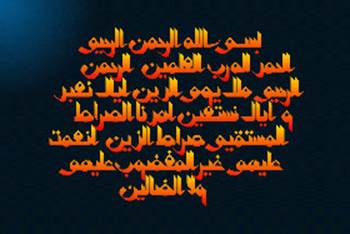 It is a known fact that every language has one or more
terms that are used to refer to God and sometimes to lesser deities at the same
time. This is not the case with Allah. Allah is the personal name of the One
true God. Nothing else can be called Allah. The term has no plural or gender.
This shows its uniqueness when compared with the word “god,” which can be made
plural, as in “gods,” or made feminine, as in “goddess.” It is interesting to
note that Alah is the personal name of God in Aramaic, the language of Jesus
and a sister language of Arabic.
It is a known fact that every language has one or more
terms that are used to refer to God and sometimes to lesser deities at the same
time. This is not the case with Allah. Allah is the personal name of the One
true God. Nothing else can be called Allah. The term has no plural or gender.
This shows its uniqueness when compared with the word “god,” which can be made
plural, as in “gods,” or made feminine, as in “goddess.” It is interesting to
note that Alah is the personal name of God in Aramaic, the language of Jesus
and a sister language of Arabic.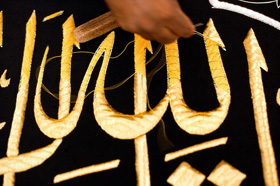 Some of the
biggest misconceptions that many non-Muslims have about Islam have to do with
the word “Allah.” For various reasons, many people have come to believe that
Muslims worship a different God than Christians and Jews. This is totally false,
since “Allah” is simply the Arabic word for “God” - and there is only One God.
Let there be no doubt - Muslims worship the God of Noah, Abraham, Moses, David
and Jesus - peace be upon them all. However, it is certainly true that Jews,
Christians and Muslims all have different concepts of Almighty God. For
example, Muslims - like Jews - reject the Christian beliefs of the Trinity and
the Divine Incarnation. This, however, does not mean that each of these three
religions worships a different God - because, as we have already said, there is
only One True God. Judaism, Christianity and Islam all claim to be “Abrahamic
Faiths”, and all of them are also classified as “monotheistic.” However, Islam
teaches that other religions have, in one way or another, distorted and
nullified a pure and proper belief in Almighty God by neglecting His true
teachings and mixing them with man-made ideas.
Some of the
biggest misconceptions that many non-Muslims have about Islam have to do with
the word “Allah.” For various reasons, many people have come to believe that
Muslims worship a different God than Christians and Jews. This is totally false,
since “Allah” is simply the Arabic word for “God” - and there is only One God.
Let there be no doubt - Muslims worship the God of Noah, Abraham, Moses, David
and Jesus - peace be upon them all. However, it is certainly true that Jews,
Christians and Muslims all have different concepts of Almighty God. For
example, Muslims - like Jews - reject the Christian beliefs of the Trinity and
the Divine Incarnation. This, however, does not mean that each of these three
religions worships a different God - because, as we have already said, there is
only One True God. Judaism, Christianity and Islam all claim to be “Abrahamic
Faiths”, and all of them are also classified as “monotheistic.” However, Islam
teaches that other religions have, in one way or another, distorted and
nullified a pure and proper belief in Almighty God by neglecting His true
teachings and mixing them with man-made ideas. The
sixth and last article of Islamic faith is belief in divine decree which means
that everything good or bad, all moments of happiness or sorrow, pleasure or
pain, come from God.
The
sixth and last article of Islamic faith is belief in divine decree which means
that everything good or bad, all moments of happiness or sorrow, pleasure or
pain, come from God. Everyone is scared of dying and rightly so. The uncertainty of what
lies beyond is frightening. It may be that of all religions, Islam, provides
the most graphic details of what comes after death and lies beyond. Islam
views death to be a natural threshold to the next stage of existence.
Everyone is scared of dying and rightly so. The uncertainty of what
lies beyond is frightening. It may be that of all religions, Islam, provides
the most graphic details of what comes after death and lies beyond. Islam
views death to be a natural threshold to the next stage of existence. Belief in
certain prophets who God chose to relay His message to humans is a required
article of Islamic faith.
Belief in
certain prophets who God chose to relay His message to humans is a required
article of Islamic faith.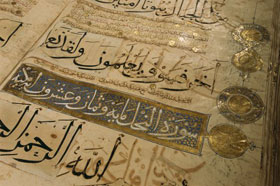 Belief
in the scriptures revealed by God is the third article of Islamic faith.
Belief
in the scriptures revealed by God is the third article of Islamic faith.